

How Czech iGaming Is Rewriting the Rules for 2026
The intersection of technology, regulation, and player experience has never been more dynamic, and for anyone running a news website about various online events, the Czech iGaming sector is producing headlines at a remarkable pace. From live dealer innovations coming out of Prague studios to blockchain-powered player protection tools, Central European developers and operators are shaping conversations that will define global iGaming for years to come. The 2026 conference season is already drawing attention to the patterns emerging from this market, and the implications reach far beyond Czech borders.
Covering online events across the digital entertainment spectrum means tracking the forces that reshape entire industries — and the Czech online casino market qualifies as exactly that kind of force. Whether you're following a live streaming trends summit or an iGaming regulatory forum, Czech platforms are claiming an increasingly central role in every agenda. This article explores the defining innovations, the hard market data, and the expert predictions that will dominate global iGaming events in 2026.
The Czech iGaming Landscape: A Market Transformed
Regulatory Maturity Driving Market Confidence
The Czech Republic's gambling regulation framework, overseen by the Ministry of Finance and the General Financial Directorate, has matured significantly since the landmark 2017 Gambling Act reshaped the sector. By 2026, this regulatory clarity has become one of the country's most compelling competitive advantages in the global iGaming arena. Operators who once faced unpredictable enforcement now work within a structured, transparent licensing ecosystem — and international investors have responded accordingly, channeling capital into Czech-based operations at record levels.
Licensed české online casino platforms have built their market reputations on compliance, player protection, and long-term sustainability. This foundation of institutional trust has become a critical differentiator as the global industry grapples with mounting regulatory pressure on consumer rights and responsible gaming standards. Czech operators have demonstrated that rigorous compliance and commercial success are not competing priorities — they are, in practice, deeply complementary ones.
Key Market Statistics That Tell the Story
The numerical picture of the Czech online casino sector reveals a market not merely growing but actively maturing. Understanding this scale is essential context for why Czech iGaming commands so much attention at global industry events.
| Metric | 2024 Figure | 2026 Projection | Growth Rate |
|---|---|---|---|
| Gross Gaming Revenue (Online) | €420 million | €610 million | +45% |
| Licensed Online Operators | 48 | 65+ | +35% |
| Active Monthly Players | 1.2 million | 1.8 million | +50% |
| Mobile Gaming Share | 62% | 78% | +26% |
| Live Casino Revenue Share | 31% | 44% | +42% |
These projections reflect a market rewarding long-term thinking. Czech platforms are making serious infrastructure investments precisely because their regulatory environment punishes cut corners and rewards sustainable player relationships. This dynamic produces an industry operating at a higher baseline quality than many less-regulated European counterparts — and it shows in the data.
The Technology Stack Powering Czech Casino Innovation
Live Dealer Revolution and Real-Time Streaming
Live dealer gaming has become the crown jewel of Czech online casino growth. Studios based in Prague and Brno have evolved into sophisticated production facilities, producing content that rivals the output of established giants like Evolution Gaming and Pragmatic Play. Czech operators have pioneered several technical advances in live streaming, most notably ultra-low-latency delivery that reduces the gap between dealer action and player screen display to under 500 milliseconds. For players accustomed to the buffering-prone streams of even five years ago, this transformation is genuinely revelatory.

What distinguishes Czech live casino studios is their commitment to multilingual dealer training and deep cultural localization. Rather than offering English-only tables — the industry default — leading Czech platforms have built dedicated rooms for Czech, Slovak, German, and Polish-speaking players. This localization strategy is paying dividends both domestically and in neighboring markets. Detailed analysis of this trend is available https://czkasino.cz/, including comparative data on player retention rates across language-localized and non-localized live dealer products.
Artificial Intelligence and Personalization Engines
The deployment of machine learning algorithms across Czech casino platforms represents one of the most consequential technology shifts in the market over the past two years. These systems analyze player behavior patterns — session length, game preferences, wagering habits, and even time-of-day tendencies — to construct increasingly accurate individual player profiles. The practical result for the player is a lobby that feels personally curated rather than generically assembled, with recommended titles reflecting actual gameplay history rather than algorithmic guesswork.
More significantly, AI is being strategically deployed in responsible gambling frameworks. Czech operators, responding to both regulatory expectations and genuine ethical conviction, have built early-warning detection systems that identify problematic behavior before it escalates. These algorithms flag accounts showing signs of loss-chasing, erratically increasing bet sizes, or logging unusually long continuous sessions. Automated intervention systems then offer self-imposed limits, cool-off periods, or direct links to support resources. This proactive approach is becoming an exportable standard that other European markets are beginning to study and replicate.
Cryptocurrency and Blockchain Integration
While Czech regulatory requirements maintain strict Know Your Customer and anti-money laundering protocols, several licensed operators have begun integrating cryptocurrency payment options within fully compliant frameworks. Bitcoin and Ethereum deposits are increasingly available alongside traditional bank transfers and local e-wallets, with processing times measured in minutes rather than business days. This hybrid approach — crypto flexibility within regulated structures — is attracting a younger demographic of players while maintaining the accountability standards regulators require.
The provably fair gaming dimension of blockchain integration holds particular long-term significance. Smart contracts that independently verify game outcomes and automate withdrawal processing directly address the oldest player concern in online gambling — trust in operator fairness. Czech developers working on these systems are building solutions that could become the industry standard verification layer across European regulated markets within the next three years, and their work is attracting significant attention from gaming regulators in other jurisdictions.
Gamification and Engagement: Czech Platforms Setting the Benchmark
Loyalty Programs Reimagined
Traditional points-accumulation loyalty schemes have been displaced on leading Czech platforms by something architecturally far more ambitious. The new generation of gamification systems treats the entire casino experience as a layered game within a game. Players advance through narrative-driven progression systems, unlock achievement badges tied to specific gameplay milestones, and participate in tournaments that span multiple days. This structural shift — from transactional loyalty to experiential engagement — has produced measurable improvements in both player retention rates and average session frequency, with some operators reporting 30–40% improvements in these metrics since implementing advanced gamification layers.
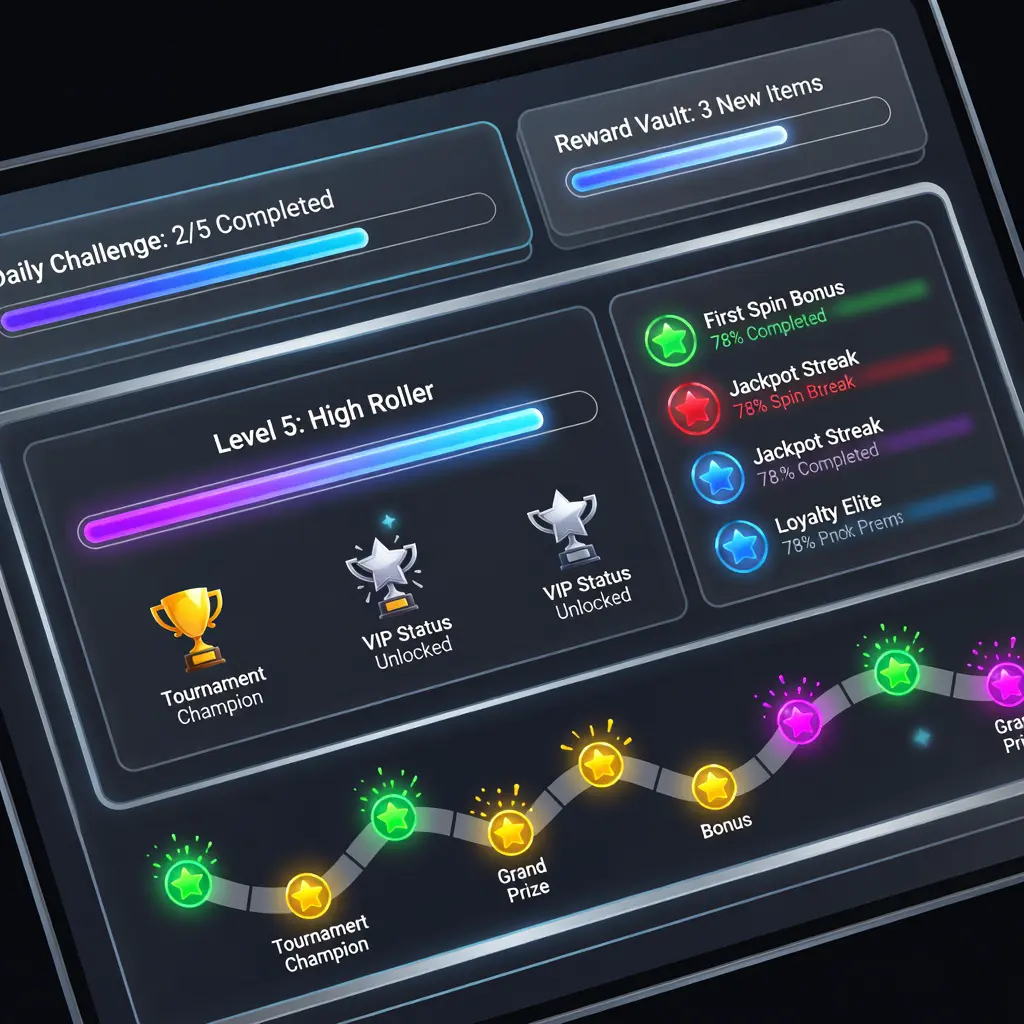
For players navigating this transformed landscape and trying to identify which platforms offer the best combination of gamification features and promotional value, knowing kde najít nejlepší bonusy is the first practical step toward maximizing the iGaming experience that Czech platforms now deliver.
Tournament Infrastructure and Competitive Gaming
Czech operators have invested substantially in tournament infrastructure, creating regular slots competitions and poker series that attract players from across Central and Eastern Europe. These events are increasingly streamed via dedicated channels, intentionally blurring the boundary between casino gaming and esports entertainment. Prize pools for flagship Czech online casino tournaments have reached six-figure CZK values, with premium international events offering euro-denominated prizes that compete credibly with larger Western European operations.
The technical backbone supporting these tournaments — custom lobby software, real-time dynamic leaderboard systems, and automated transparent prize distribution — represents genuine innovation worth examining. Several Czech development houses are now actively licensing this infrastructure technology to operators in other regulated markets, establishing the Czech Republic as an iGaming solutions exporter rather than simply a consumer of international platform providers. This shift in the value chain is one of the most underreported stories in European iGaming.
What Industry Leaders Are Predicting for Global iGaming Events in 2026
The major iGaming conference circuit — ICE London, SBC Summit Barcelona, and the Prague Gaming Summit — is already generating significant pre-event discussion around themes emerging from the Czech market. Industry analysts and senior operators are aligned on several key predictions for where Czech iGaming influence will be most visible:
- Czech framework as EU regulatory template: Multiple member states are actively studying the Czech approach as a model for regulation that genuinely protects players without suppressing operator innovation or investment.
- VR casino products reaching mainstream: Czech developers leading early VR casino adoption are positioned for significant first-mover advantage as consumer headset penetration crosses the viability threshold in 2026.
- Cross-border licensing reciprocity agreements: Industry leaders anticipate bilateral frameworks that allow Czech-licensed operators to serve neighboring markets without full re-licensing — a development that could transform Central European iGaming geography.
- AI-driven compliance automation: Czech-built tools that automate regulatory reporting, KYC checks, and responsible gambling monitoring are expected to become widely adopted across European licensed markets.
- Casino streaming as a marketing channel: Czech operators pioneering live streaming of casino content are creating a new content-entertainment hybrid that regulators across the continent are watching with growing interest.
- Responsible gambling technology exports: Player protection tools developed under Czech regulatory requirements are being adopted internationally as voluntary industry standards, giving Czech solution providers a significant commercial advantage.
These industry predictions align closely with broader patterns visible across the online events trends landscape, where the convergence of engagement technology, regulatory maturity, and streaming culture is collectively reshaping how digital entertainment industries grow and compete at global scale.
A Strategic Roadmap for Operators Entering the Czech Market
For international operators considering a Czech market entry in the 2025–2026 window, industry veterans consistently recommend a disciplined strategic sequence that reflects the market's distinctive characteristics:
- Engage specialist legal counsel from the outset: Czech gambling law is detailed, actively enforced, and evolving. Working with lawyers who specifically specialize in Czech iGaming regulation before beginning any license application process saves substantial time, cost, and reputational risk.
- Build a Czech-language product from launch day: Players in this market are sophisticated and expect genuinely native-language interfaces, responsive Czech-speaking customer support, and localized promotions — not translated versions of international products with approximate Czech text.
- Prioritize mobile architecture absolutely: With over 62% of Czech online casino sessions currently occurring on mobile devices — projected to reach 78% by 2026 — mobile optimization is not a desirable feature but the minimum baseline expectation.
- Invest in local payment infrastructure: Czech players demonstrate strong preferences for domestic payment methods, particularly direct bank transfers and local e-wallets. Relying on international card processors alone creates unnecessary friction and signals unfamiliarity with the market.
- Implement responsible gambling tools proactively: Czech regulators expect operators to exceed minimum requirements in player protection. Building comprehensive self-exclusion tools, deposit limit systems, session time management, and reality-check features from launch demonstrates regulatory commitment and accelerates trust-building with players.
- Budget for continuous compliance investment: The regulatory environment evolves with the market. Operators should plan for regular legal reviews, third-party compliance audits, and periodic system updates as requirements are refined — treating compliance as an ongoing operational commitment rather than a one-time project.
Virtual Reality and the Next Frontier of Czech Casino Innovation

Perhaps the most consequential development emerging from Czech iGaming circles in 2026 is the serious and sustained investment several operators are making in virtual reality casino environments. Where VR casinos once seemed perpetually consigned to the "next year" category, the hardware barrier — long the primary obstacle to consumer VR adoption — has dropped dramatically enough that a meaningful and growing segment of the gaming population now owns or has access to a capable headset. Czech developers are positioned earlier in this curve than almost any other European operator cohort.
The VR products under active development by Czech studios go far beyond simply replicating a physical casino floor in digital form. The most ambitious projects feature persistent social spaces where players navigate environments using avatars, observe other players' sessions, participate in virtual events staged within the casino environment, and access live dealer tables that feel genuinely three-dimensional. The technical challenge of cross-platform integration — connecting these VR experiences seamlessly with mobile and desktop interfaces so players can switch between formats without losing session continuity — is one Czech engineering teams are actively solving, and their solutions could define industry standards when VR casino gaming achieves mainstream scale.
Esports Betting: A Natural Extension of Czech Gaming Culture
Czech Republic carries a deeply embedded competitive gaming culture — the country has produced world-class esports competitors and hosts major gaming events that draw international audiences annually. Czech online casino operators are systematically leveraging this cultural affinity by building sophisticated esports betting products that go well beyond simple match outcome wagering. In-play markets for CS2, Dota 2, League of Legends, and Valorant are available on leading Czech platforms, with market depth, speed, and odds accuracy competitive with the best specialized esports betting sites globally.
The convergence of traditional casino gaming and esports betting under a single licensed regulatory framework is a model Czech operators have refined over several years. Industry analysts expect other markets to study and replicate this integrated approach, and at the major iGaming conferences of 2026, Czech operator case studies on cross-category player acquisition strategies are already scheduled as headline panel content. The esports dimension adds a younger player demographic, different engagement rhythms, and new content marketing opportunities that pure-casino operators cannot access.
Responsible Innovation: The Defining Quality of Czech iGaming
If a single characteristic most distinguishes Czech iGaming in the current era, it is the industry's commitment to what practitioners are calling responsible innovation — a philosophy that treats player welfare not as a regulatory compliance exercise but as a genuine strategic priority. Leading Czech operators have demonstrated through their commercial results that protecting players and growing revenue are not competing objectives. They are, in the long run, mutually reinforcing ones: players who trust a platform return to it repeatedly, refer others to it, and spend within sustainable limits rather than chasing losses and ultimately disengaging.
This philosophy manifests in concrete operational decisions: prominently displayed game return-to-player percentages presented without technical obfuscation, bonus terms written in clear language without buried wagering requirements, customer support that proactively reaches out to players showing potential stress indicators rather than waiting to respond to complaints. Czech operators have essentially proven in a live market that ethical product design and competitive commercial performance are compatible — and increasingly, that ethical design is itself a competitive advantage in a market where players have genuine alternatives.
The broader responsible gambling conversation across European iGaming has shifted noticeably as Czech operators have taken more active roles. Rather than reluctantly conceding to regulatory minimums, Czech platforms are contributing to the development of voluntary best practice frameworks, sharing anonymized behavioral data with academic research institutions, and participating in pan-European responsible gambling initiatives that go beyond their strict legal obligations. This positioning generates a credibility dividend — with regulators, with consumer advocates, and with the growing segment of players who factor responsible gambling credentials into their platform choices.
Conclusion: Why the Czech iGaming Story Has Global Significance
The trajectory of Czech online casino platforms in 2026 offers more than a compelling regional growth story — it provides a replicable model for how regulated iGaming markets can achieve ambitious commercial scale while maintaining meaningful player protection and regulatory credibility. The trends examined throughout this article — regulatory maturity, live dealer studio excellence, AI-powered personalization, blockchain verification, advanced gamification, VR development, esports integration, and responsible gambling leadership — collectively describe an industry sector operating at a genuinely high level of sophistication.
For anyone tracking developments across online events and digital entertainment industries, the Czech iGaming narrative contains patterns with broad applicability. The innovations being developed and refined in Prague, Brno, and Ostrava today will influence how platforms are built, licensed, and experienced across Europe and in markets far beyond the continent in the years immediately ahead. The 2026 global iGaming conference circuit will feature Czech innovation prominently — not as regional novelty, but as a genuine standard-bearer demonstrating what this industry achieves when technical expertise, sustained investment, and regulatory clarity operate in alignment.
Whether your perspective is that of an operator evaluating market entry, an investor assessing capital allocation, a regulator benchmarking best practices, or simply a player choosing where to spend leisure time, the Czech iGaming evolution of 2026 deserves serious, sustained attention. The most significant chapters of this story are still being written — and the global iGaming community is watching closely to see what Czech platforms will build next.





Comments
The section on multilingual live dealers caught my attention — it’s impressive that Czech platforms are customizing tables for multiple languages instead of just English. That seems like a smart way to boost player retention.
The part about multilingual dealer tables caught my eye—it's interesting how Czech platforms are tailoring experiences for different languages rather than just defaulting to English.
It's impressive how Czech platforms are using AI not just for personalization but also to proactively support responsible gambling—feels like a step ahead compared to most other markets I've seen.
The under-500ms latency claim for the Prague live dealer streams sounds awesome, but is that measured end-to-end on typical mobile connections or just in a controlled studio setup?
The part about Prague/Brno live dealer streams hitting under 500ms latency sounds wild—does that number include typical home Wi‑Fi, or is it measured in a studio/ideal setup?